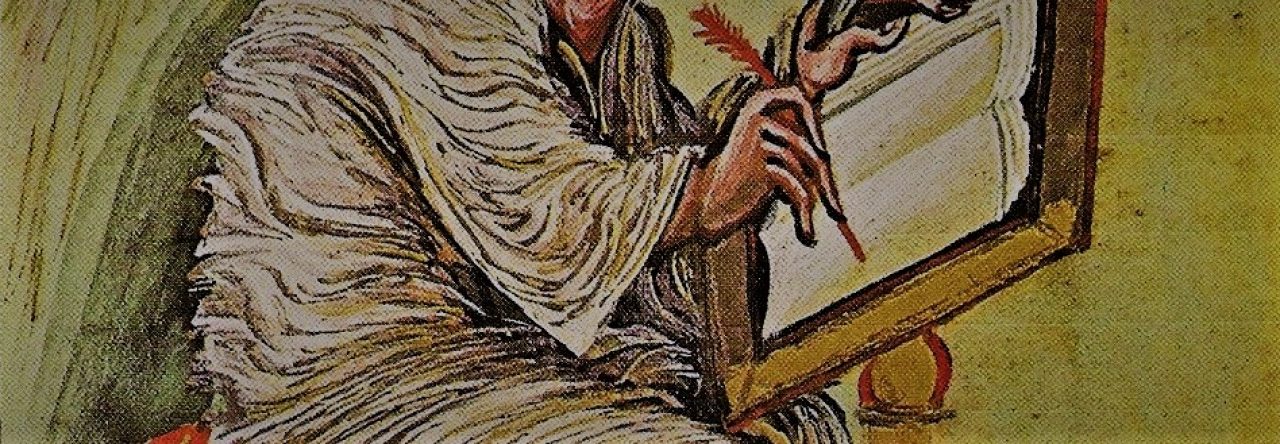
“We have no king but Caesar,” the Pharisees and chief priests.
This post is a continuation of the reflection that I embarked upon in my last article, ‘We Found Witches, the Inquisition of Control Over Human Freedom.” If you have yet to read it, I’d recommend you read it before reading this post. Here I’m continuing with themes I established there.
I did a great interview with Buck Johnson at Counterflow podcast on certain themes that I raised in my previous article; you may listen to it here. Please give it a listen.
In general, this is a continued reflection on certain influences that, it seems to me, have helped to shape aspects of the Nation in which I live, the United States. I’m not trying to do a historical analysis. I’m contemplating ideologies that have shaped and informed the world in which I live. These are influences, I think have had a significant part in molding certain current political mentalities. They also have a direct effect on us in the USA and beyond.
Our current “secularized” government is quite religious. Religion, whatever form it may take, seeks to establish a cohesive worldview for its adherents. It, through some method, seeks to influence the hearts and minds of people. Modern government in general must provide a civic religion for its people (since it claims to be free from any religious influence). Sovietism is an interesting study on this point. In the modern age, so they tell us, we have reached the cutting edge of progress and therefore the modern form of government is the best, specifically “Democracy.” And you just need to have faith in that profession. “Secular” government claims to be free of “religious” influence. Obviously, me thinks it is not so. The secular government has set itself up as a new religion. “Democracy” is a more aggressive faith system, in certain ways, than medieval Rome. It seems to be trying to compete with one of its sisters, Communism, in the quantity of blood spilled for the cause.

Throughout history, governments and religious forms were always connected, be it pagan, Confucianism, Islam, Christianity, and so forth. Religious cult is important to Government’s function. One may think that it is terrible or great, but my point is simply that it is the way the world has functioned. Today, whether the government is secular or confessing, a specific meaning of life must be conveyed to people. This meaning of life must be undergirded with a specific set of beliefs. These beliefs are intended to bring a degree of social cohesion. Governments can never be without an approved confession. Where this confession originates varies, especially in the modern age. Typically, in former times, a cohesive religious structure would serve as a counterbalance to Government structures, if needed. Thus, there was a potential check to unchecked Governments, not in an oppositional way but in a more organic manner, at least so it seems. Nature is full of balance. It is when balance is disturbed that problems ensue.
In my previous article, I contemplated the Puritans and their hunt for witches to establish a purified society. The Puritans are a primary foundation of Yankee culture in America. Now, the point is not to bash, who needs that? I’m simply trying to highlight mentalities. Indisputably, Puritan culture has had a fair hand in molding the Nation in which I live. Puritans viewed structured government as one of the best tools by which to spread their society. One that they envisioned as a “light on the hill.” They had a deep identity of being those chosen by God to show the world the “right way to live.” Much of the mentality behind “manifest destiny” can be traced back to Puritan/Yankee ideologies. Government structure, civic planning, public schools, and so forth were all rigidly molded. They were set forth as the pattern of their expanding communities. They were calibrated to standardize. Whole settlements would be sent out with the pattern of this pure structure in hand to expand and settle new lands. Government was a vital mode by which to enforce approved living. Puritans would voluntarily tax themselves to support it. It was a blessing. Government was the tool to bring light to those in darkness. The government was a force of righteousness. It seems to me that the Puritans gave a “church like” significance to government. Maybe that’s because they had an impoverished understanding of what the Church actually is. It was the job of the Government, so they professed, to be very active in their community members’ lives; it was the government’s prerogative to “mind your business.”
It is a myth that government can be “neutral” and detached from “religious influence.” But this mythos is essential for modern government. Somehow, it claims, it will remain “non-religious,” fair, and neutral to all (as the modern world sees it), competing world-views/religions. This myth is constantly promoted in America. It needs to be. This way, it can enact non-neutral policies in the name of neutrality and equality. It is better for appearances to strike out from behind the cover of “neutrality.”
As I’ve observed in the past, governments have most of the time been intertwined with some religious faith, like it or not. The early Christians were viewed as a threat to the social fabric of the pagan Roman Empire because they would not pinch incense on the altar of Caesar. The Roman State viewed Christianity as a novel faith that could potentially disrupt the fabric of Roman society. Caesar was proclaimed a divine ruler.
When the Roman Empire began to convert to Christianity in the early 300s, the idea of “Symphonia” emerged to moderate the relationship between Church and State, although it was not always properly lived. In Byzantium, most of the time, Church decrees (such as from councils) were confirmed with an Imperial decree. Sometimes this was a two-edged sword for the Orthodox Church; if the Emperor professed a non-Orthodox belief or supported a non-Orthodox council, he would frequently bring the full power of the State behind him to enforce it. St. Maximos the Confessor and his situation are an example of this. Iconoclasm seems to have begun as a state-sponsored ideology with which the Church found herself in direct conflict. Sometimes things are messy. Nevertheless, most of the time, the overreaching power of the State was balanced by the authority of the Church. A momentous example is St. Ambros of Milan forbidding Emperor Theodosius I from entering the Church because he had horribly massacred a multitude in Thessaloniki. Even Caesar is subject to God Most High and must give an answer for his rule. It was neither the King, as head of the church, nor a Bishop as head and supreme overseer of State power.
In the “medieval era” of Europe, the Pope began to mix into his office both supposed celestial and temporal power. He was the appointed supreme authority of things celestial and temporal. He ruled in a “divinely” established Papal-caesarism. He alone was the maker and breaker of princes. God had ordained it. Both the government and the church were subject to him.
A substantial aspect of the Protestant Reformation was a rebellion against this Papal form of government. Germanic princes saw in the teachings of Martin Luther a means to extricate themselves from the authoritarian thumb of Rome. Religious justification was needed to rebel against the proclaimed “Vicar of Christ.” Luther provided the religious justification.
Luther’s idea of “Two Kingdoms” furnished the Germanic princes with the ideology they needed to declare government free from Papal supremacy. Although, as with a lot of things, this trend took a little while to fully mature.
In England, under Henry VIII, the Papal-caesarism of the Pope was flipped. In the 1534 Act of Supremacy, the King was declared the supreme head of the church of England. A type of Caesaropapism was enacted. The State is the church. Thus, to obey the State is to obey the church. Silencing all the potential Thomas Mores is vital to the survival of the State-church. Don’t you dare question the King as ruler of the church. Although the Puritans were heavily persecuted by the English State-church, they seemed to have sufficiently imbibed the idea of state as church and subsequently re-imagined it on the N. American continent.
The French Revolution vowed to destroy both throne and altar. Liberty would reign as a supreme goddess.
In Russia during the 1700s, Peter the First (sometimes called “the great”) deconstructed the existing structure of the Orthodox Church and subjugated it in great part to the State. His desire for full State power was threatened by Symphonia. Both in Byzantium and in Rus’ (and elsewhere), the Church was an authority other than the State over the hearts and minds of people. When the State became abusive, frequently the Church was a counter power to it, take for example Tsar Ivan the Terrible and Met. Philip of Moscow (remember, Met. Philip is the saint and martyr). Peter did not want a structure of authority (outside his control) that would possibly surpass the State in the lives of the people. He followed Western models, disbanded the Patriarchate of Moscow, and set a “holy Synod” as the highest Church authority. This was composed of compliant bishops and lay bureaucrats appointed by the Emperor. The State must control all modes of influence over the hearts and minds of people. The Church is a department of the State. Religion is useful in the hands of the State.
Generally speaking, in most places of the world, governments would nominally enforce a chosen confession. Even Oriental Governments did this. Islam frequently manifested in a theocratic form. Take, for another example, the repression of Christianity in Japan in the 1800s. A foreign religious confession was viewed as a threat to national cohesion. Generally speaking, this can at least be understood.
In antiquity, these confessions were not fabricated directly by the State but were based on some preexisting faith that claimed a divine authority. Thus, the State, more or less, acknowledged an authority other than or higher than itself.
The 20th century oversaw the near-total deconstruction of the “Old World.” Communism, Fascism, two World Wars, and so forth, were the mills in which the old Empires were ground away and the new order of Governments, as we know them, fully emerged. In America, Europe, and its offspring Societies, government was almost completely “secularized.” Some of them became “anti-religious.” You can love it or hate it, but that’s not my point here.
I think it is safe to posit that modern government encompasses a multi-functional form of civic management. This includes politics, private corporations, organizations, mainstream media/entertainment, and so forth. These varying facets all work to encourage and support the approved belief system; they also work to discredit and silence any competing unapproved belief systems. Propaganda is vital.
It is difficult to outpace the influence of history, and the USA is no exception (although sometimes it seems we fancy thinking that we are). The seminal ideas of government that formed the young country of the United States were formulated within the context of the much-boiling themes of church and State that were rolling on the burners of Europe from the 1500s and on. The various settlements of the American colonies had their own modes of dealing with the idea of Government. Over the course of American history, certain ideas have gained dominance in the arena of Government and its place in society. The lockstep and top-heavy power of Puritan/Yankee Government does indeed seem to be a main ideology fueling much of Government relations today. I already touched on some of its ideologies above.
It should not be surprising that our Federal Government believes it has the power to decree new “morals” and other ways of living to everyone. This trait is fully within the developmental DNA of our Nation; the Puritan/Yankee mentalities fully provide for it. Today, it has the power (so it believes) to declare men, women and women, men, or whatever someone wants to be – Presto! (Except for if it contradicts the newly professed government decrees, you can’t do that.) Legality makes it “right.” You are intolerant if you disagree. Government is a force for “good,” and it also decides how the “good” will be defined. It is not surprising that it believes it must defend and enforce these decrees, even if in doing so it violates the beliefs of other worldviews, of which it claims it is simply a neutral moderator. It will not remain neutral if those other worldviews are challenging the cohesion of its declared professions. That’s a hate crime. It is also not surprising that it seeks to manage, sometimes forcefully, personal aspects of life such as health and “medicine” for its population. The State is the master of collective liberty. It also believes itself to be the appointed master of nature. Although it no longer primarily bases itself on general Protestant ideas, like its mother, the Puritan model, it has, nonetheless, prominently retained the fundamental idea that Government is the supreme authority together with the accompanying trappings. Government will not willingly relinquish this entitlement. It is duty-bound to bring the new standard of “righteousness” and approved modes of living to everyone. Moreover, it is fulfilling in itself the historical trajectory set in motion hundreds of years ago when the State was declared the church. Globally speaking, organizations such as the EU and UN also have this mentality. I’m hard pressed to think of a modern Government (that I know of) that does not. But I can’t follow that trail right now.
Modern Government has declared itself a god unto itself and to all others. A divinity no longer decides what is “right or wrong,” no, this power now resides totally with the State. Harmony no longer needs to be maintained. The State is god. It is the chosen one. It is the supreme power to which all other religions must now yield; it provides the new standard of faith and confession that must be professed. All other confessions must submit to it, or they are intolerant and obstructive, domestic terrorists of a terrible sort. It demands the faith of the people, just trust the experts after all. Even if what you see with your eyes and touch with your hands contradicts the approved decree of belief, you must disbelieve your own senses and trust the way of the State. Only through it will society be truly purified. The modern State sees itself as endowed with supreme power over all mankind. Evolution has so ordained it. All men are to serve the grand machine; that is the purpose of life.
Separation of church and State is a one-way street. The government is the highest authorityty and all other religious professions are barred from influencing government affairs. The State-church has the prerogative to dictate to the other religious churches, if need be, how they should be operating. Certain events of the recent past have exemplified this understanding and function.
Americans may well ponder the question that H.D. Thoreau posed many years ago, “How does it become a man to behave towards the American government today? I answer, that he cannot without disgrace be associated with it.”
Nevertheless, the cult of government is dutifully instilled in people through most educational systems. It should be telling that institutions of higher education cultishly indoctrinate their students in this religion. They tolerantly teach how intolerant certain other faith systems are, and therefore should not be tolerated. Thus, most of us have grown up with this cultic influence all around. Its abnormality is frequently perceived as somewhat normal to us. We have two approved denominations that are offered to the general populace, complete with their own versions of rituals. It helps to give the appearance of diversity. Although one of them does seem to now be an explicit death cult. Yet, it frequently seems that people are simply offered heads or tails of the same coin. As the plebs squabble about heads or tails, the powers that be are happy that the same coin is always accepted in the end. It is the coin that ultimately matters.
Many people, even when they enter or are raised in another faith profession, for example, Christianity, will bring with them this underlying belief system of Puritan/Yankee government. It happens that this belief system, at times, has a greater influence on them than the other chosen faith tenets. If nothing else, such folks at least make sure that proper respect is always offered to the State-church. Although it does happen that some will demand that the form of Christianity in which they are operating modify itself and begin to profess the State-dictated faith standards. Obeisance is not enough. A firm confession must be made. Caesar is divine after all. Some people may unwittingly do this, others, it seems, are zealous and willing evangelists of the State religion and feel it is their duty to demand that its decrees be enshrined by every religious group. Thus, it should not surprise Orthodox Christians that there are even such zealous evangelists who claim to be Orthodox. Their primary allegiance is to the approved State cult. They see themselves as reformers who are bringing the guiding light of Supreme “liberal” government to the dark corners of backward religions. They are grand benefactors and will enlighten you, want it or not. But if you are observant, you will notice that such actors primarily use the approved ideology and vocabulary of the State cult, peppered with some Orthodox phraseology, to degrade and demean the Faith and those who seek to live according to it.
Maybe we have come full circle in some sense. Christians once again live in a society guided by a fervent State cult. We may and should function honestly and forthrightly in the Nations where we live. Yet, we cannot, together with our early Fathers and Mothers, pinch (the modern versions of) incense on the State altar. It is certainly not a Christian altar in the least. And its new faith doctrines are most certainly not Christian whatsoever.
But maybe the temptation to proclaim, “We have no King but Caesar,” is ever present.
That’s my reflection for now. You can take it or leave it.
 The Inkless Pen
Hi there,
to: Fr. Zechariah
this articles it is very complex as i see. If there is possible to accept my opinion: please try to not wrote that much in an article, this one should be parted in 2. It is very long and hard to read and in the same time to keep focused :). Even it is very good, you loose the reader on the way being that long. You have good skills of writing so use it in/as you high level. I hope to get the point and not be offended.
But in the end, you have my vote for it 🙂
Wish all of you… nice day!
LikeLiked by 1 person
Pingback: Links for 13 April 2024 – Just the Links
thank you, Fr Z, for these words of explanation to what I have been seeing and experiencing but not understanding. I pray that all Orthodox believers would stand firm in the faith once delivered…and that we would not abdicate True Religion for state religions.
LikeLike